
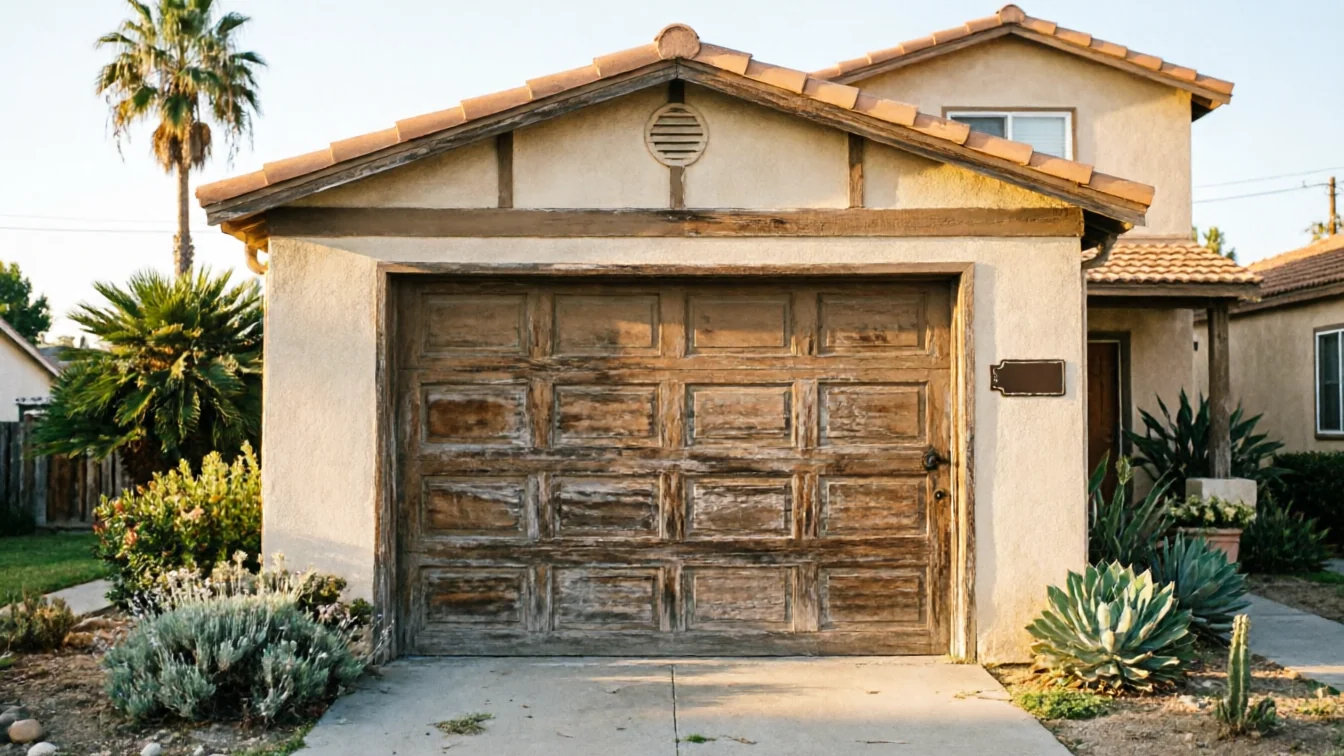
Newport Beach, CA · Garage Door Service
What an Older Garage Door Is Actually Worth Fixing
A guide for Newport Beach homeowners on when a 1960s-70s garage door is worth repairing versus replacing, based on local housing age and mild coastal climate.
- Repairs & new doors
- Springs & openers
- Serving 7 nearby communities
When Waiting Is Fine
Not every noise or sticking panel means a trip out this week. Newport Beach sits in a mild temperate band, and that matters more than people think. We don't get the freeze-thaw cycles that crack torsion springs overnight or the humidity swings that warp wood panels in a season. A door that's a little stiff on a cool morning here usually stays a little stiff - it doesn't snap. If your door is original to a house built in the 1960s or 70s, which covers most of this area, a slow roller or a hinge that needs a squirt of lubricant can wait for a scheduled visit rather than an emergency call. The exception is anything involving the spring under tension or a cable that's frayed - those don't improve with patience, regardless of climate. But a dent in a panel, a track that's slightly out of true, an opener that's noisier than it used to be - those are fine to sit with until you've got a free afternoon. Mild weather buys you time that homeowners in harsher climates don't get, and there's no reason to pay rush rates for a problem that isn't getting worse by the week.
What Most People Get Wrong
The mistake we see across the 26 named areas we work in is assuming a door's age tells you its condition. It doesn't, not here. With housing stock running from 1938 up through 2015 and a median build year of 1973, you've got two very different situations wearing the same gray hair. A door from a 1973-built house that's had the spring replaced once and the hardware kept lubricated can easily outlast a door from a 2005 build that's never been touched. People also assume that because the climate is mild, doors don't need attention at all. Mild doesn't mean maintenance-free - it means the failures are mechanical wear, not weather damage. Springs still fatigue from cycle count. Rollers still wear out from use. The other common error is replacing a whole door because of one bad spring or a dented bottom panel, when the rest of the unit, track, and opener are sound. On a well-built door from that 1973-era stock, a spring job or panel swap is often a fraction of full replacement cost and gets you another decade.
What Is Going On
A door built or installed anywhere from the late 1930s through the mid-2010s has had a lot of time to accumulate small issues that compound. The most common thing we find on original doors from houses in the 1960s-70s range - which is the bulk of what's out there - is torsion spring fatigue combined with rollers that were never upgraded from the original steel. Steel rollers wear a groove into the track over years of use, and once that groove is there, the door runs rough no matter how well the spring is holding up. On the newer end of the range, doors from 1990s and 2000s builds more often show opener and sensor issues rather than structural wear, since the hardware itself is younger. Knowing which decade your house falls into tells you where to look first. We don't guess at this - we open the door, check the spring wind and the roller wear pattern, and tell you honestly whether you're looking at a repair or a replacement, based on what's actually failing, not just the door's age on paper.
What Local Conditions Do
The mild temperate climate here is kind to garage doors in some ways and unkind in others. You don't get the metal fatigue from repeated freezing that breaks springs in colder regions, and you don't get the wood rot and swelling that humid climates cause in panels. What you do get, especially closer to the coast around Corona Del Mar and Newport Coast, is salt air that speeds up corrosion on exposed hardware - hinges, track bolts, and spring coils that aren't sealed or coated. We see this more on doors facing west or south that catch the onshore air directly. It's not dramatic, but it's steady, and it's the reason a door near the water sometimes needs hardware replaced years before a similar door further inland would. If your house is one of the older ones in this range and you're near the coast, that's the detail worth checking first - not the spring tension, but whether the hardware itself has started to pit or rust at the mounting points.
Frequently asked questions
My garage door is original to a house built in the 1970s. Is it worth repairing?
Often yes. A lot of what fails on doors from that era is the spring and rollers, not the door panels themselves. If the panels are straight and the track is true, a spring replacement and roller upgrade can get you another decade out of it for well under the cost of a new door.
Does the coastal air near Newport Beach affect garage door hardware?
Yes, more than people expect given how mild the climate is overall. Salt air speeds up corrosion on exposed hinges, bolts, and spring coils, especially on doors closer to the water around Corona Del Mar and Newport Coast. Hardware there sometimes needs replacing before an inland door of the same age would.
How do I know if my door problem can wait or needs a call right away?
Anything involving a spring under tension, a frayed cable, or a door that's come off its track needs attention right away. Slow rollers, minor dents, or a noisier-than-usual opener can typically wait for a scheduled visit, especially given how mild our local climate is on hardware.
Related garage door services in Newport Beach
More garage door guides
Book garage door service in Newport Beach
Call now or request a quote - tell us what the door is doing and where you are.